
The First Film To Document Campus Antisemitism Both Before & After October 7
Winner of the 2026 Religion Communicators Council Award of Excellence
VIEW THE TRAILER
Blind Spot is a wake-up call turned rallying cry from students facing and fighting antisemitism on their campuses, in their own words.
About the film
A must-see film about the threat to Jewish life on campus, told through the voices and experiences of students
Blind Spot is the first film to document both the antisemitism that existed on American campuses before October 7 and how it led to the explosion of virulent and often violent campus antisemitism after October 7. In their own words, it tells the story from the perspectives of more than two dozen students at more than a dozen schools who’ve experienced and fought against this hatred.
Jewish students are on the front lines of a modern-day civil rights movement. Blind Spot bears witness to their bravery in the face of extreme hostility, indifference, and efforts to silence them and erase their Jewish identity while too many school administrators fail to take action. Blind Spot shows Jewish students asserting, defending, and demanding the enforcement of their right to be treated equally with all others in America, free from hostile learning environments and discrimination in and out of the classroom. It is a call to action for us to stand together to pressure university leaders and elected officials to act decisively to root out antisemitism on campuses from all sources, whether it’s faculty, students, administrators, outside groups, or anywhere else.
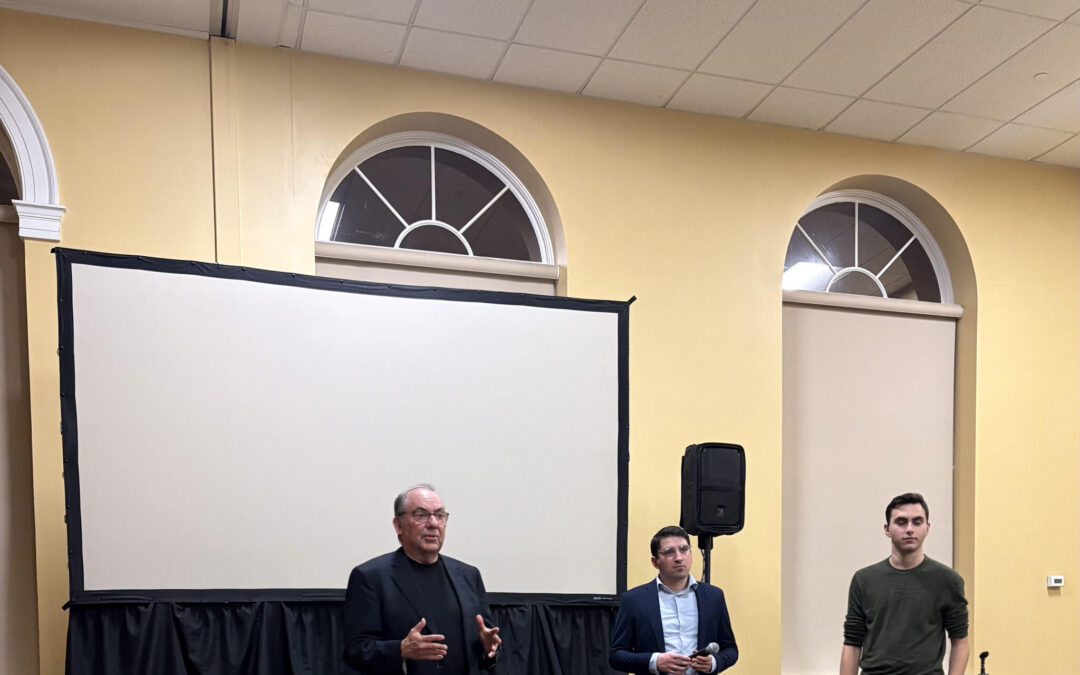
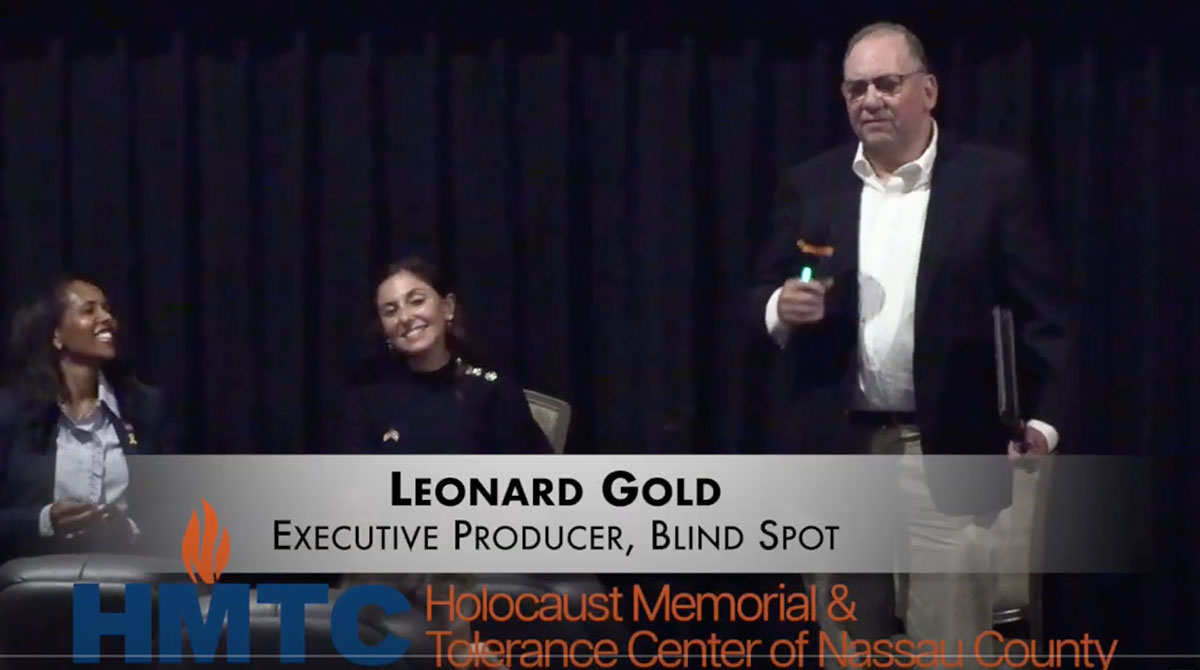
Blind Spot Executive Producer Lenny Gold recently had the honor of moderating a discussion with Judge @roykaltman about Altman`s NY Times bestelling book, Israel on Trial, before an audience of more than 200 people at @thehamptonsynagogue in Westhampton Beach, NY.
The conversation explored important questions surrounding numerous prevalent claims against Israel, why those claims lack merit and how they can be countered, and the broader challenges facing the Jewish community today, especially in American academia - and what can be done to meet those challenges.
For Blind Spot, which examines and exposes antisemitism on college campuses before and after October 7, opportunities to participate in conversations like this are especially meaningful because the problem which inspired Lenny and his team to produce Blind Spot is, unfortunately, still very much a threat to the civil rights and well-being of Jewish students across America - and because what starts on campus doesn`t end on campus.
We’re proud to see Lenny helping to lead discussions that encourage greater understanding, accountability, awareness, and action.
Thank you to @rabbimschneier, @roykaltman, and everyone who joined for such an engaging program.

Blind Spot Executive Producer Lenny Gold enjoyed a meaningful day at @thehamptonsynagogue earlier this month, where he attended the Stewart Cahn Global Breakfast Forum featuring @realleoterrell in conversation with Rabbi Marc Schneier.
Terrell serves as Senior Counsel to the Assistant Attorney General in the Civil Rights Division of the U.S. Department of Justice and Chair of the DOJ Task Force to Combat Antisemitism.
With the federal government continuing to examine antisemitism and civil rights concerns, particularly on college campuses, the conversation was especially relevant to the work behind Blind Spot. We’re grateful for opportunities like this to stay engaged with the leaders and conversations shaping the national response to antisemitism.
Our Executive Producer, Lenny Gold, was honored to attend Fordham University`s President’s Reception at the Westhampton Country Club, where he had the opportunity to reconnect with Fordham President Tania Tetlow.
President Tetlow shared an inspiring update on Fordham’s continued growth, increasingly selective admissions standards, and commitment to delivering a values-based education. She also highlighted Fordham’s internship program, one of the oldest in the country, which has a participation rate of more than 90%. Together, these achievements demonstrate why Fordham serves as a model for universities across the country.
As Blind Spot continues to shine a light on antisemitism on college campuses before and after October 7, we know how important strong, principled university leadership can be in shaping the campus experience. It was encouraging to once again hear President Tetlow confirm Fordham’s continued commitment to its students, its values, and its responsibility for educating the next generation.
Thank you to Fordham University for a wonderful evening. ❤️🙌
Rep. Ritchie Torres (D-NY) asserts that college campuses have become ground zero for the new antisemitism - particularly its anti-Zionist strain. He notes that, in 2022, nine student organizations at UC Berkeley adopted bylaws prohibiting pro-Israel or Zionist speakers.
Because the majority of Jews identify as Zionist, Torres says, a ban on pro-Israel speakers is essentially a ban on most Jews. He draws this analogy: If an institution adopted a ban that had the real-world effect of excluding the majority of African Americans, it would be rightly recognized as a form of systemic racism. The same standard, he argues, must apply when a policy has the real-world effect of excluding the majority of Jews - that it is systemic antisemitism.
Maya Sobel says that antisemitism has been a problem at UVM for a while, and she recounts an example involving a UVM club, unaffiliated with the school, for survivors of sexual assault, that has an Instagram account called Share a Story. Students would anonymously submit stories of what had happened to them, and Share a Story would post those stories to raise awareness of what was happening on campus and offer a space for support for victims.
Then "Share a Story" openly refused to post the testimonies of Jewish students who were Zionists - basically telling Jewish sexual assault survivors that unless they explicitly renounced the State of Israel in its entirety, their accounts of sexual assault did not matter.
She asks whether Share a Story would tell the same thing to any other students whose countries have problems, such as Russian students, Chinese students, or anyone else?
Dion Pierre discusses hate crimes that continued on American college campuses this past year: desecration of Jewish religious symbols, a fraternity house invaded and smeared with pork matter, swastika graffiti - and a particularly disturbing incident at New York University in which a student raised a swastika flag over the campus during commencement, featuring a Star of David next to a swastika at its center.
He explains that this kind of imagery is often used either to equate Israel with Nazism or to invoke the fear of classic antisemitism while criticizing Israel. The NYU student has since been charged with several hate crimes and other offenses.
Dion notes that these profoundly disturbing acts would have been universally condemned ten years ago, especially if they had been directed at more politically valuable minority groups on the progressive left. His overall assessment: we are seeing fewer overt, nasty acts of antisemitism than in previous years, but the ideological problem remains.
Rep. Ritchie Torres (D-NY) describes three categories of Jew-hatred: Anti-Judaism (hatred for Jews as a religious community), antisemitism in the traditional sense (hatred for Jews as a race), and anti-Zionism (hatred for Jews as a nation). He eays that anti-Judaism and traditional antisemitism typically come from the far right; and anti-Zionism typically comes from the far left; and that those combating it are fighting a two-front war.
He warns against politicizing antisemitism. The blind spot on the right, he explains, is the inability to see antisemitism on the right - and only seeing it on the left. The blind spot on the left is the inability to see antisemitism on the left - and only seeing it on the right. He says we must recognize that it comes from both ideological directions, and condemn antisemitism no matter where it comes from, what form it takes, or who is responsible.
Torres notes that in New York, a disproportionate number of hate crimes target the Jewish community, and that the FBI reports more than half of religiously motivated hate crimes are directed towards the Jewish community, with the Orthodox Jewish community disproportionately affected. While there are multiple causes, he points to the systematic dehumanization and demonization of Jews in both mainstream and social media as factors in inciting violence against Jews.
Maya Sobel describes how a friend received a death threat in May 2021 for posting about Israel on social media - and has never posted since. She says that pattern is common on campus: Pro-Israel students posted in 2021, then stopped because it`s exhausting and difficult, because people don`t listen, and because the way these conversations are approached makes people wonder what the point even is.
Maya says she still posts proudly about her own identity and views, but the opposition, as she puts it, doesn`t sleep - and after hearing what happened to her friend, she has had to ask herself whether she should be more careful.
She closes on a more hopeful note: She is inspired by her peers` willingness to stand up for what they believe in. Standing your ground and saying what you believe is true is an important life lesson - but, she adds, students also need to be willing to step back and ask what`s the other side of the story. Speaking out is a double-edged sword: it can be powerful, and it can be harmful. She doesn`t dislike anyone for speaking critically of anyone - the UVM administration, the Israeli government, or even her own community - because we`re all human, and we should all be able to take criticism and understand it.
PRESS
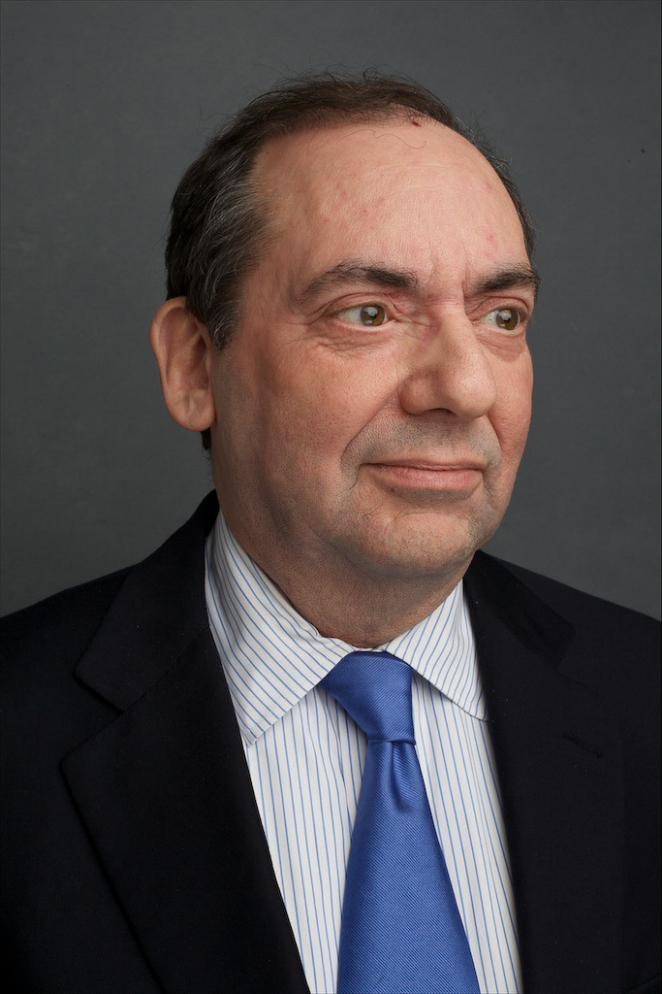
Blind Spot Features Courageous Students Telling Their Stories (The Reflector | Jewish Community Federation of Richmond)
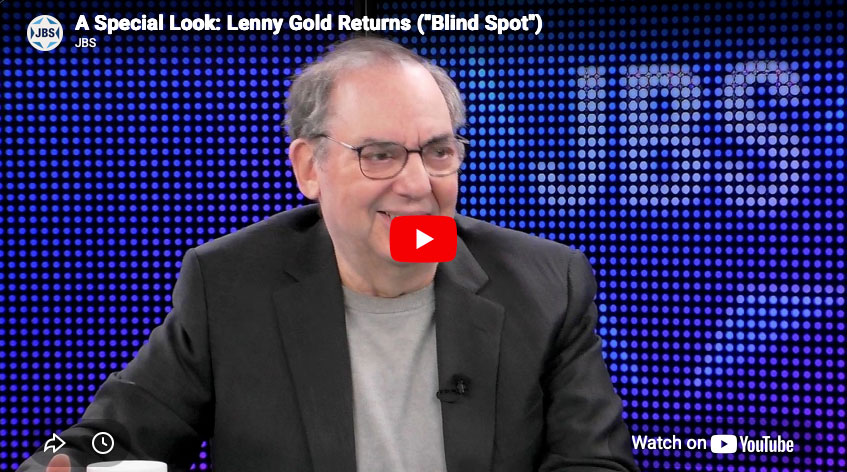
“Blind Spot is the students’ story,” noted Executive Producer Lenny Gold. The New Yorker has been on a mission to document and communicate widespread antisemitism in schools since 2009 when he learned his son encountered antisemitism at his school in…
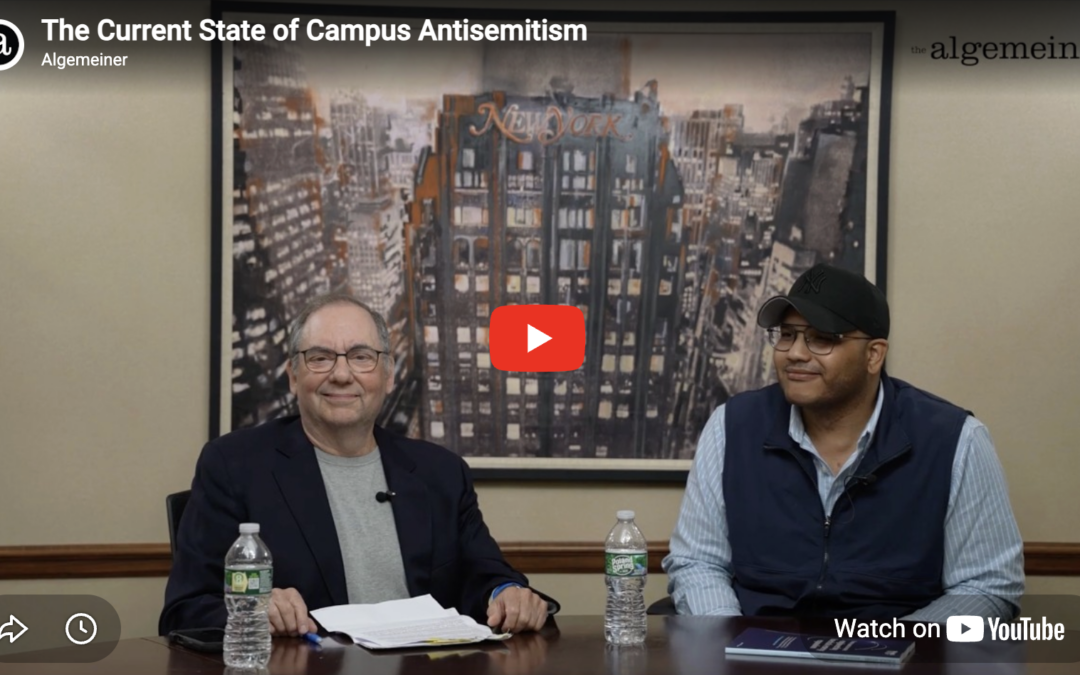
Jewish Community Advocates Urge US Civil Rights Commission to Take Campus Antisemitism Seriously | The Algemeiner
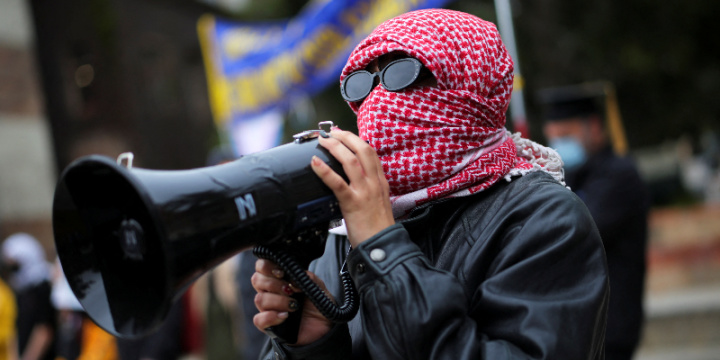
Jewish community advocates and civil rights lawyers discussed the campus antisemitism crisis in American higher education during two days of briefings and public comment held by the US Commission on Civil Rights last week, urging the agency to fight anti-Jewish…
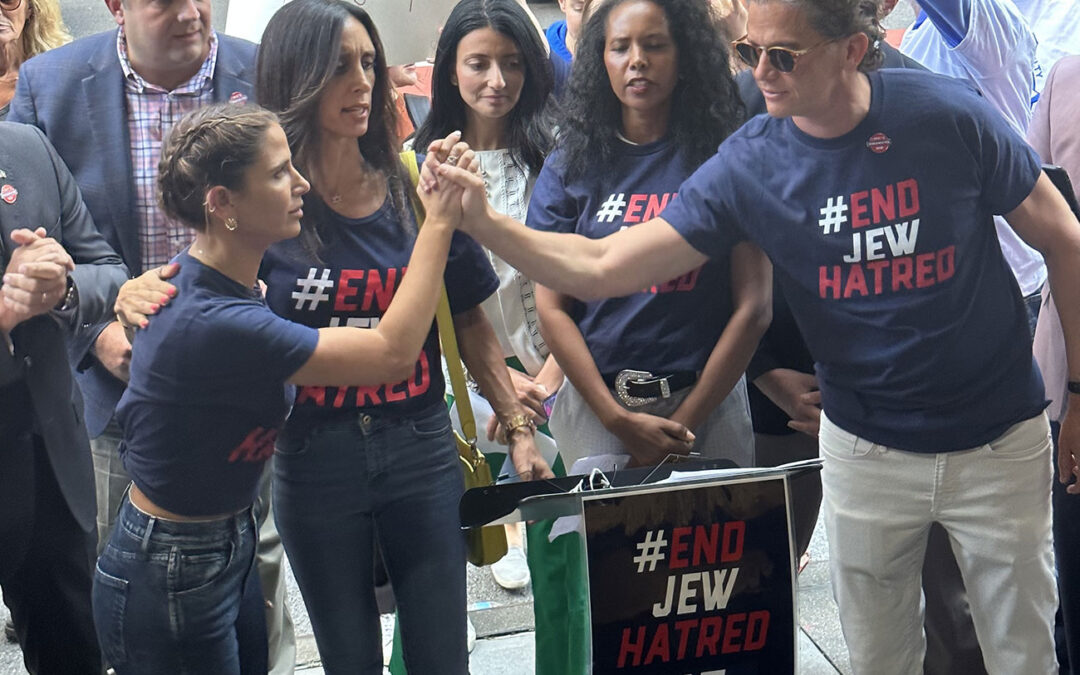
A New Movie About Campus Antisemitism | Why Evolution Is True
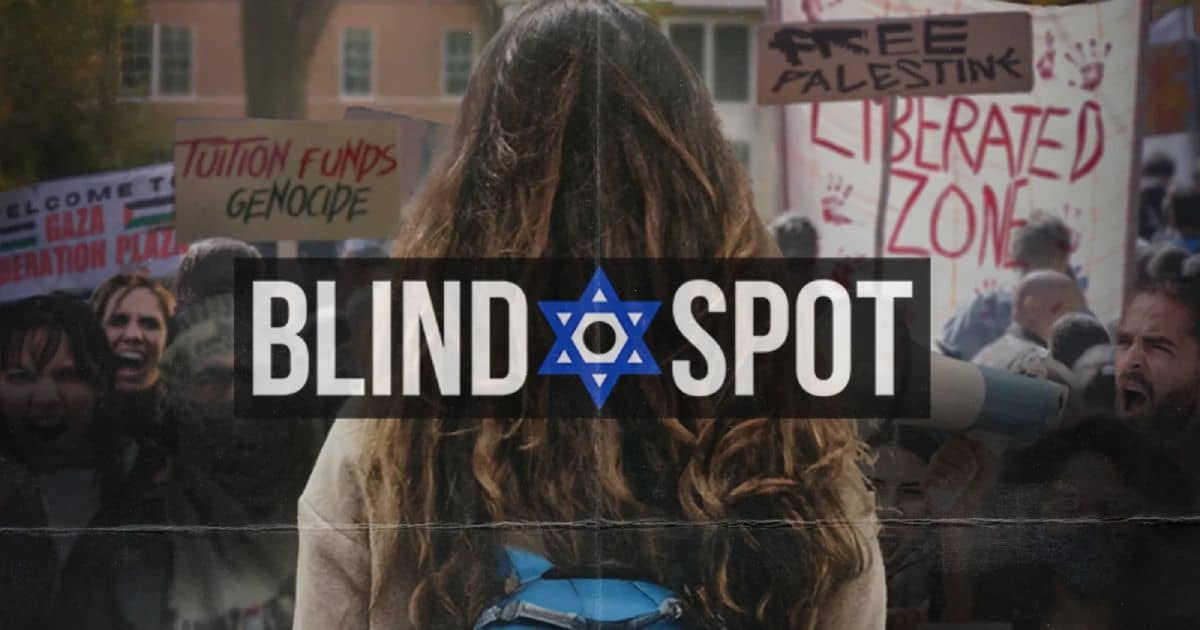
Reader Enrico sent me a link to this video called “Blind Spot“, a 2024 movie that’s 95 minutes long. The topic is antisemitism on American college campuses. The YouTube notes: “Blind Spot” is the only current film focused exclusively on…
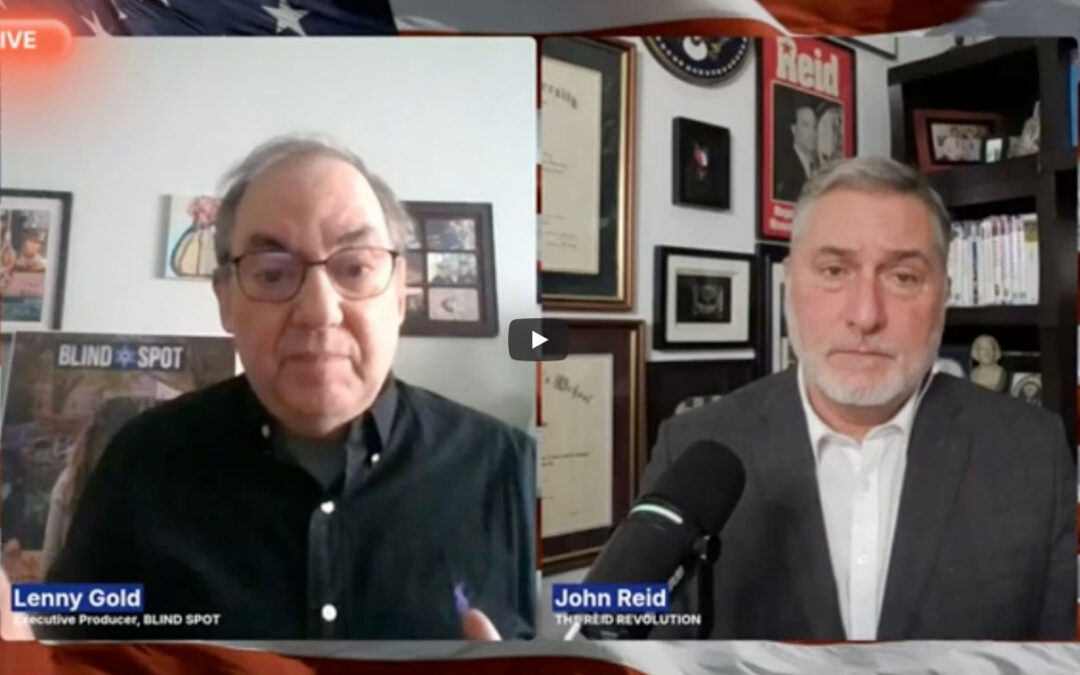
Jew-Hatred on Campus Meets Louis Armstrong | Jewish Journal
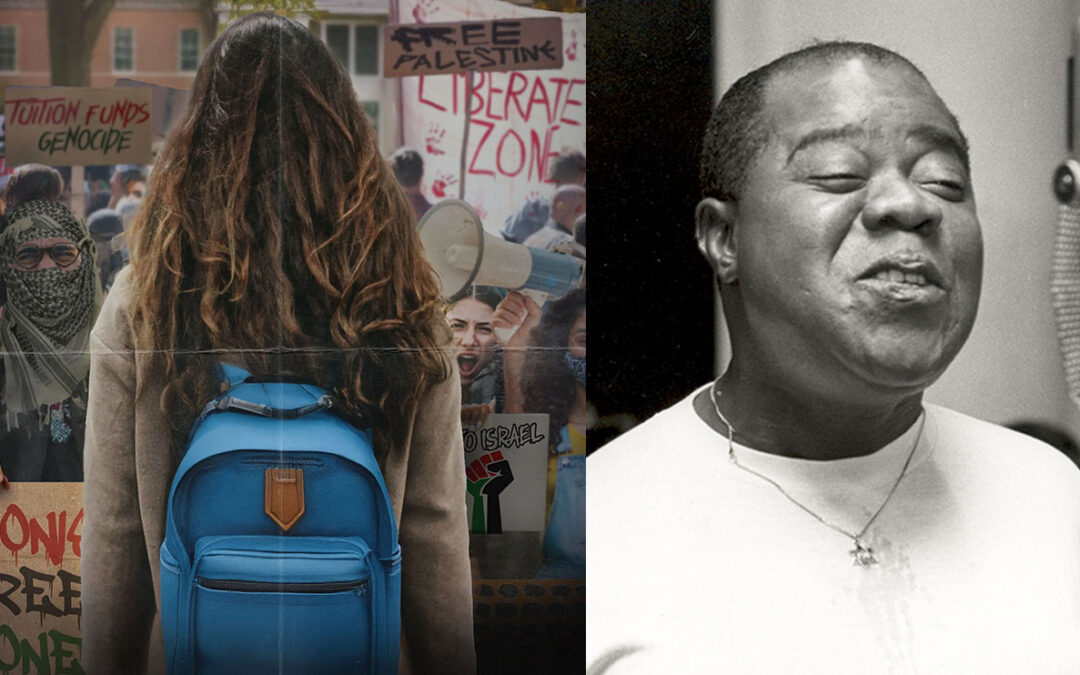
The Jewish story in America is marked by an aspiration to thrive and contribute, not by a need to defend ourselves. Sometimes you see a movie and the thing you take away has nothing to do with the movie. That happened to…
HOST A SCREENING
Want to organize a screening for your community? Let us know!
"*" indicates required fields
The filmmakers
Ironbound Films
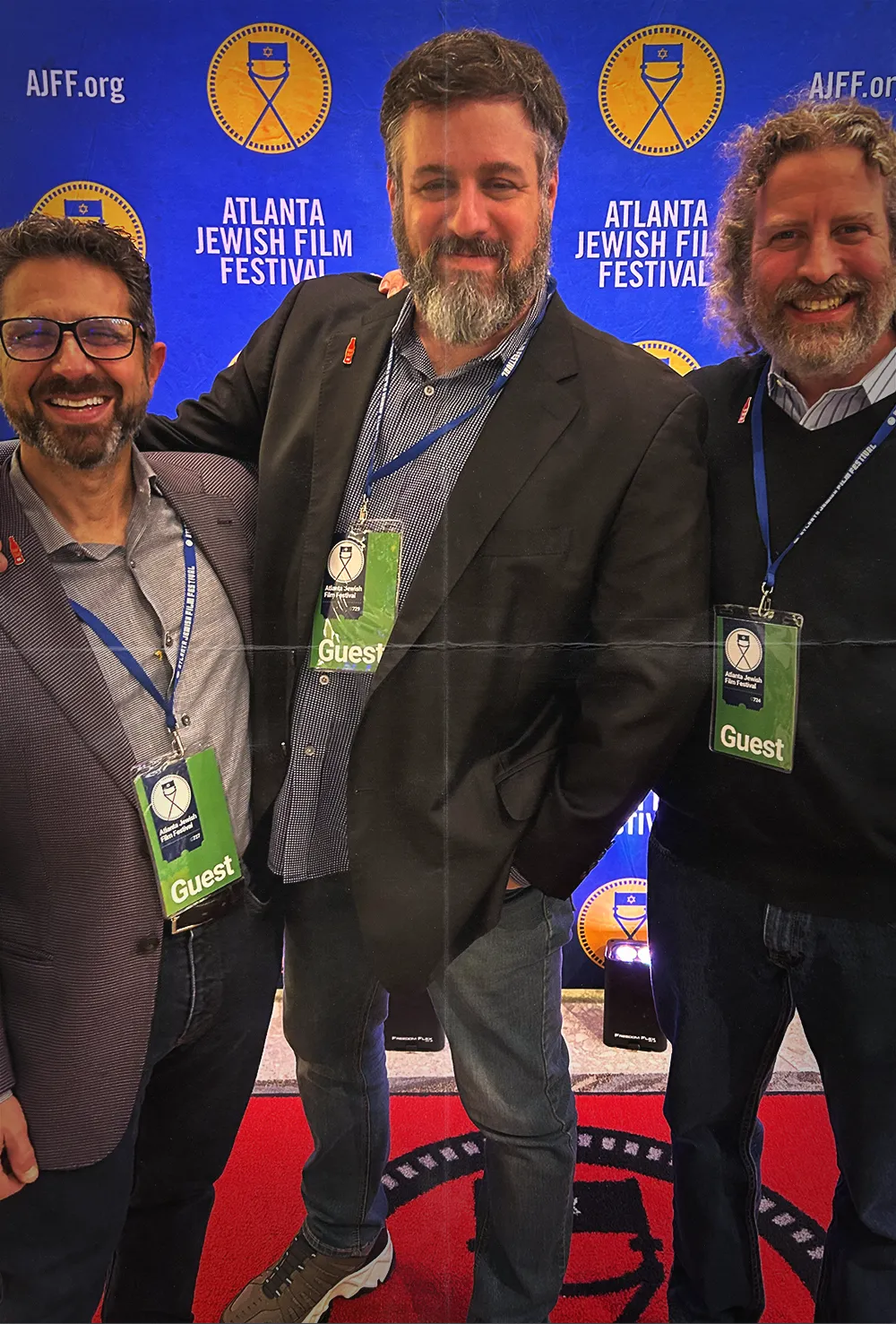
Seth Kramer, Daniel A. Miller, and Jeremy Newberger are Ironbound Films. They produced and directed the Jewish baseball blockbuster Israel Swings for Gold, in theaters now, and its prequel, Heading Home: The Tale of Team Israel. Their other films include PBS rock doc Yung Punx: A Punk Parable, Tribeca and CNN cult classic Évocateur: The Morton Downey Jr. Movie, festival and theatrical hit The Anthropologist, PBS’s Emmy-nominated The New Recruits, and their Sundance Film Festival breakout, PBS’s Emmy-nominated The Linguists.
Leonard Gold
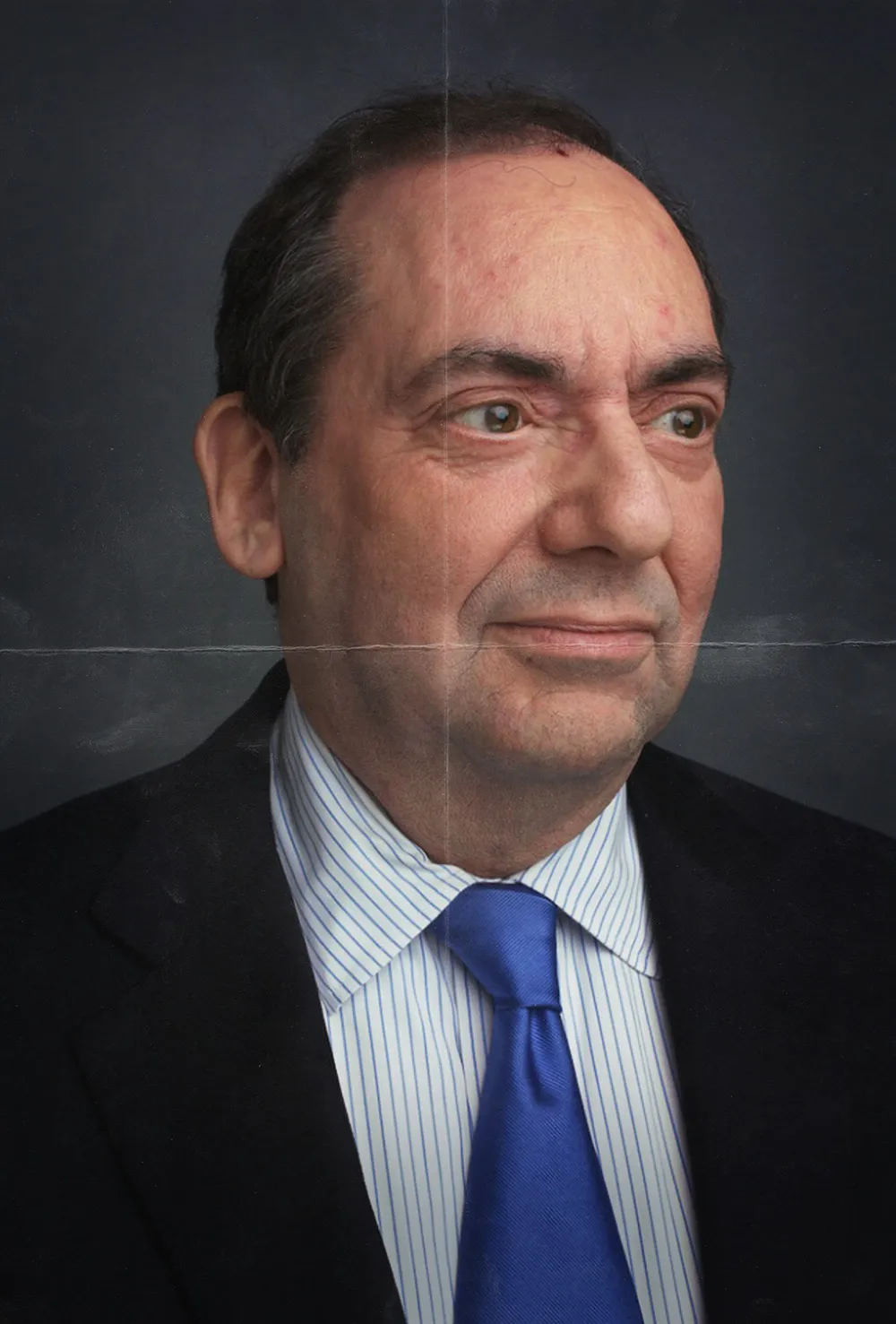
Leonard Gold first became aware of antisemitism in academia when one of his sons encountered it in middle school in 2009. Over time he came to understand the scope and breadth of the problem, and set out to share his knowledge with the general public. Blind Spot is the result of that effort.
The filmmakers
Ironbound Films
Seth Kramer, Daniel A. Miller, and Jeremy Newberger are Ironbound Films. They produced and directed the Jewish baseball blockbuster Israel Swings for Gold, in theaters now, and its prequel, Heading Home: The Tale of Team Israel. Their other films include PBS rock doc Yung Punx: A Punk Parable, Tribeca and CNN cult classic Évocateur: The Morton Downey Jr. Movie, festival and theatrical hit The Anthropologist, PBS’s Emmy-nominated The New Recruits, and their Sundance Film Festival breakout, PBS’s Emmy-nominated The Linguists.
Leonard Gold
Leonard Gold first became aware of antisemitism in academia when one of his sons encountered it in middle school in 2009. Over time he came to understand the scope and breadth of the problem, and set out to share his knowledge with the general public. Blind Spot is the result of that effort.
Contact Us
Get in touch
"*" indicates required fields


